/ THE SHORT ANSWER
- 01The model is among the first open foundation models built specifically for lunar science.
- 02The dataset aligns more than 30 layers from nine instruments across four missions.
- 03IBM reports improvements on selected ice, volcanic, and crater tasks.
- 04Open code and benchmarks make independent testing possible.
/ dotSuper point of view
The most important release is the complete research system: model, aligned dataset, benchmarks, code, and reproducible tooling, not a standalone model checkpoint.
What was released
The model is trained primarily on Lunar Reconnaissance Orbiter data and is available through Hugging Face, with code on GitHub.
The release includes machine-learning-ready pretraining data and benchmark collections.
NASA says the model integrates with the open-source TerraTorch toolkit.
- Open model weights
- Public codebase
- Aligned lunar datasets
- Task benchmarks and research paper
Research tasks and reported results
The company reports up to 22 percent lower error for one ice-potential task and nearly 19 percent improvement on one context-scale crater comparison.
Those results are specific to cited datasets, baselines, and evaluation settings.
Independent replication is needed before treating them as general performance claims.
- Ice-potential mapping
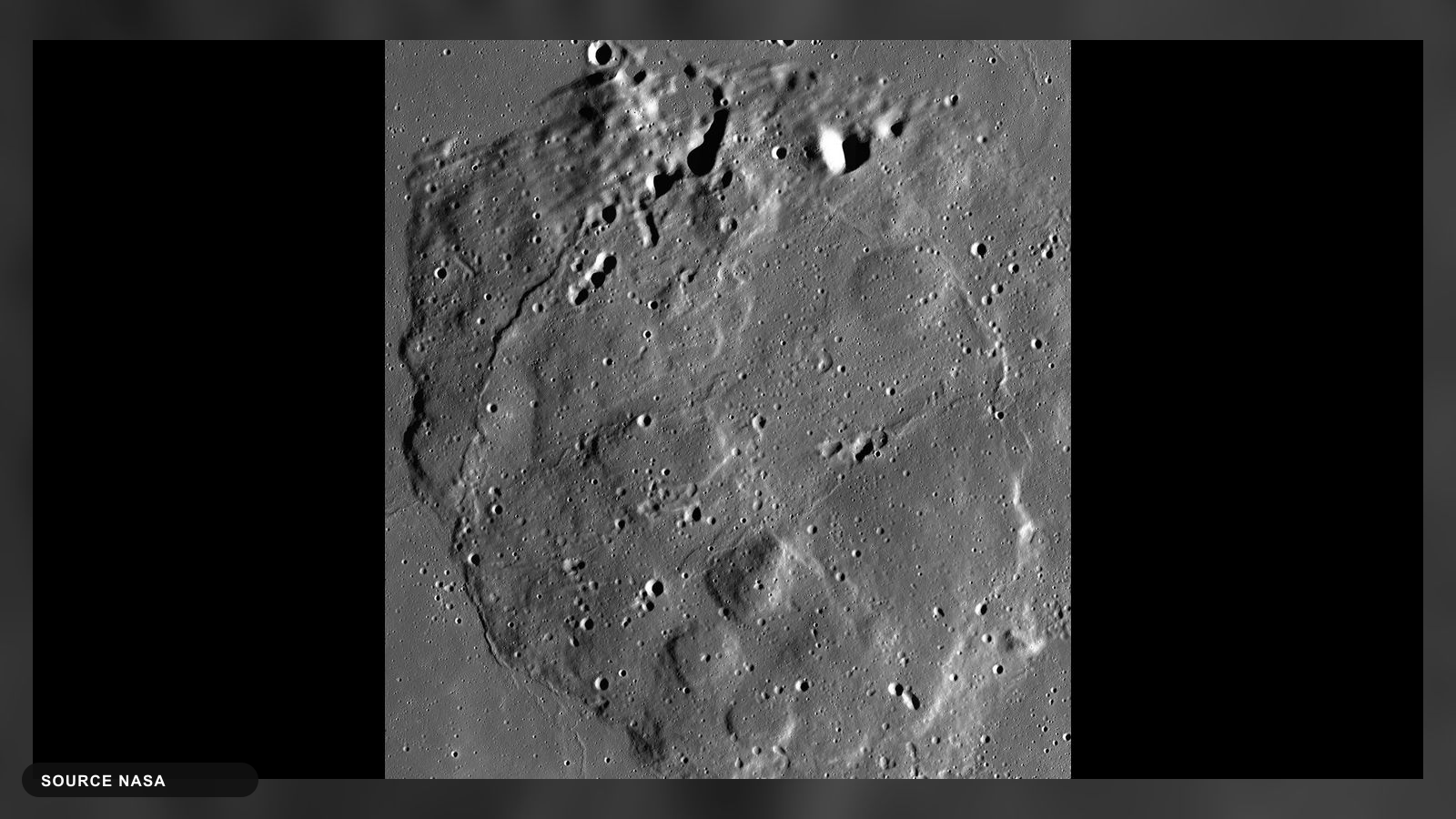
- Irregular Mare Patch analysis
- Crater detection and context
- Landing and infrastructure research support
Why the dataset matters
Aligning more than 30 layers from nine instruments across four missions creates a reusable starting point that individual teams may struggle to assemble.
Domain teams considering foundation models should budget for data rights, alignment, provenance, benchmark design, and expert review before model training.
- Document instrument and preprocessing provenance
- Preserve spatial and temporal alignment
- Benchmark against simpler methods
- Keep scientists in the evaluation loop
What this page cannot conclude
- 01Benchmark improvements are reported by the project partners.
- 02The model does not replace scientific validation or mission-specific analysis.
- 03Performance can vary across instruments, regions, resolutions, and downstream tasks.
Sources
- 01NASA, IBM launch AI foundation model for lunar scienceNASA · accessed Sep 11, 2026
- 02IBM and NASA release open-source AI model to support lunar explorationIBM · accessed Sep 11, 2026
Our editorial standard · Found an error? Send a correction with its source.
/ CITE OR SHARE THIS GUIDE
Make the evidence easy to verify.
When you reference this guide, link to its canonical URL. That gives readers one stable place for the evidence, limitations and future updates.
dotSuper Research Desk. (September 11, 2026). IBM and NASA Release an Open Lunar AI Model: What Researchers Can Build. dotSuper. https://dotsuper.net/feeds/daily-briefing/2026-09-11-ibm-nasa-open-lunar-foundation-model